
Views: 0 Author: Site Editor Publish Time: 2026-09-14 Origin: Site
Up to 70% of clinical diagnostic errors occur during the pre-analytical phase. Incorrect tube selection, poor mixing, short draws, and unstable specimens can all affect test accuracy.
Choosing the correct vacuum blood collection tube is therefore both a clinical and procurement decision. Tube quality influences rejection rates, analyzer performance, turnaround time, and patient redraws.
This guide explains how to match tube additives and materials to specific tests. It also covers vacuum stability, compliance, supplier qualification, and implementation requirements.
Correct Additive: Tube color and additive must match the test to prevent interference, clotting, and false results.
Material Selection: PET tubes provide shatter resistance, lower weight, and reliable transport performance for routine collection.
Quality Control: Vacuum accuracy, additive concentration, coating uniformity, and shelf-life stability require documented validation.
Implementation: Reliable supply, controlled inventory, local validation, and order-of-draw training are essential.
Incorrect additive-to-blood ratios can compromise specimen quality immediately. When a tube underfills, the additive concentration becomes too high for the collected volume.
This imbalance may contribute to hemolysis, altered analyte concentrations, or unreliable coagulation results. Poor mixing or degraded anticoagulants can also allow micro-clots to form.
Micro-clots may block analyzer probes and distort hematology measurements. Hemolyzed or clotted samples often require rejection and repeat collection.
The operational cost extends beyond the tube itself. Redraws delay reporting, increase staff workload, consume additional supplies, and cause unnecessary discomfort for patients.
A reliable clinical blood sample tube should provide consistent draw volume, additive performance, closure integrity, and shelf-life stability.
Procurement teams should request technical data showing how vacuum and additive performance are maintained during storage and transportation.
 |  |  | 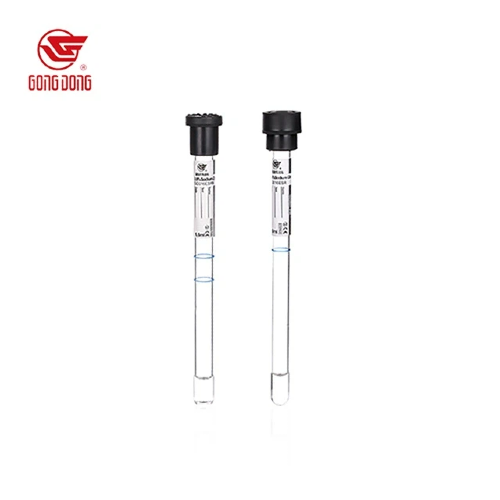 |
Disposable Vacuum Blood Collection Tube (Heparin With Separator Gel Tube) | Disposable Blood Collection Tube (Serum Gel And Clot Activator Tube) |
Hematology testing includes Complete Blood Counts, blood typing, and selected transfusion procedures. These applications commonly use an EDTA blood collection tube with a lavender or purple top.
EDTA binds calcium and prevents coagulation. The additive amount and distribution must remain controlled to preserve cell morphology and support accurate automated counting.
Many laboratories prefer spray-dried K2 EDTA because liquid K3 EDTA may introduce slight sample dilution. A qualified hematology testing tube should have a uniform internal coating and consistent draw volume.
Chemistry and immunology assays usually require serum separated from blood cells. A serum gel tube typically contains a clot activator and polymer separator gel.
During centrifugation, the gel moves between the serum and cellular components. A stable barrier helps reduce continued cellular metabolism during storage and transport.
Gel density, movement, and barrier stability should be validated. Plain red-top tubes may be more suitable when a test is known to be affected by separator gel.
PT, APTT, D-Dimer, and related assays commonly use light-blue-top sodium citrate tubes. Sodium citrate provides reversible anticoagulation.
These tests depend on an accurate 1:9 additive-to-blood ratio. A short draw creates excess citrate relative to blood volume and may falsely prolong clotting results.
Procurement teams should therefore review draw-volume tolerance, vacuum consistency, citrate concentration, and shelf-life validation carefully.
Grey-top tubes containing sodium fluoride and potassium oxalate are commonly used when glycolysis must be limited during glucose or lactate testing.
Royal-blue-top tubes are used for selected trace-element and toxicology tests. These products require controlled raw materials and manufacturing conditions to minimize metal contamination.
Tube Top Color | Core Additive | Primary Laboratory Application | Mechanism of Action |
|---|---|---|---|
Lavender / Purple | K2 or K3 EDTA | Hematology (CBC, Blood Typing) | Binds calcium to prevent clotting. |
Yellow / Gold (SST) | Clot Activator & Polymer Gel | Chemistry Panels & Serology | Accelerates clotting; gel separates serum. |
Light Blue | Sodium Citrate (3.2% or 3.8%) | Coagulation Studies (PT, APTT) | Binds calcium reversibly (1:9 ratio). |
Grey | Sodium Fluoride / Potassium Oxalate | Glucose & Lactate Testing | Inhibits glycolysis. |
Glass tubes offer chemical resistance and may still be required for selected specialized assays. However, they are heavier and can shatter during collection, transport, centrifugation, or disposal.
Broken glass creates exposure risks for phlebotomists, couriers, and laboratory staff. It can also result in complete sample loss and mandatory recollection.
A PET blood collection tube provides shatter resistance and lower transport weight. Properly manufactured PET tubes can also maintain stable vacuum throughout the stated shelf life.
Glass may remain preferable for assays in which target drugs or trace analytes interact with plastic, surfactants, or separator materials.
When evaluating PET tubes, buyers should review internal coating uniformity. Uneven surfactant application may contribute to cell adhesion, poor sample recovery, or hemolysis during processing.
Technical documentation should cover raw materials, wall consistency, interior treatment, closure performance, and vacuum retention.
Vacuum naturally declines as air gradually enters the tube over time. Near the end of shelf life, excessive vacuum loss may cause short draws.
Short draws alter additive-to-blood ratios and may compromise hematology, chemistry, or coagulation testing.
Procurement teams should request draw-volume data covering the full shelf life. Accelerated-aging and real-time stability testing can support the manufacturer's claims.
Certifications and market clearances should be reviewed through verifiable documents rather than supplier statements alone.
ISO 13485 Certification: Confirm that the certification scope covers the relevant medical-device manufacturing activities.
Market-Specific Clearances: Review the applicable CE, FDA, or other regulatory documentation required in the destination market.
Clinical Validation Data: Request evidence that the tubes perform consistently on relevant analytical systems without material interference.
Manufacturing documentation should identify the sterilization or cleanliness-control process used for the finished product.
Automated inspection can help detect incorrect additive volume, closure defects, dimensional variation, and cosmetic damage before release.
Lot numbers should support traceability from raw material and additive preparation through assembly, inspection, packaging, and shipment.
High-quality tubes cannot prevent errors caused by an incorrect collection sequence. Staff training should follow the laboratory's approved order-of-draw procedure.
Drawing an EDTA tube before a chemistry tube may transfer trace potassium EDTA through the collection device. This can falsely increase potassium and reduce calcium results.
Training should cover tube identification, fill volume, mixing, collection sequence, labeling, storage, and transport.
Supplier evaluation should include production capacity, raw-material continuity, lead times, minimum order quantities, and technical support.
Inventory levels should be aligned with consumption and shelf life. Excess stock increases the risk that tubes will expire before use.
A secondary qualified supplier may improve resilience, but both sources should pass the same laboratory validation criteria.
Request representative samples and applicable Certificates of Analysis before changing suppliers or signing a bulk contract.
Run trials across the departments that will use the tubes. Review draw volume, additive mixing, hemolysis, clot formation, gel barrier stability, analyzer compatibility, and result comparison.
Bulk approval should follow documented review by laboratory, clinical, quality, and procurement stakeholders.
Blood collection tube selection connects patient safety with laboratory efficiency. The correct additive, draw volume, and material help reduce specimen rejection and analytical interference.
PET tubes improve handling and transport safety for many routine applications, while glass may remain necessary for selected specialized assays.
Before bulk purchasing, verify vacuum stability, additive tolerances, compliance documents, lot traceability, and local analyzer performance. Staff training on collection and order of draw is equally important.
For vacuum blood collection tube samples, additive options, PET tube specifications, quality documentation, bulk procurement, or customized clinical consumable requirements, contact Gongdong Zhejiang Gongdong® Medical Technology Co., Ltd. to share your application and sourcing specifications.
A: An expired tube may lose vacuum and fail to collect the required blood volume. This can distort the additive-to-blood ratio and compromise test results.
Expired tubes should be removed from inventory and discarded according to the facility's procedures.
A: The collection sequence reduces additive carryover between tubes. Trace contamination from EDTA, citrate, or other additives may alter results in the next specimen.
Facilities should follow their approved procedure and provide regular phlebotomy training.
A: No. Separator gels may interact with selected therapeutic drugs, hormones, or other analytes.
Use a plain serum tube when the test method or laboratory procedure identifies gel interference as a risk.
A: Manufacturers control tube volume, closure insertion, pressure-setting conditions, and sealing during automated assembly.
Representative samples from each lot should undergo draw-volume and vacuum-retention testing before product release.


