Views: 0 Author: Site Editor Publish Time: 2026-11-02 Origin: Site
Consistent centrifuge tube quality helps protect samples, equipment, and routine laboratory workflows.
When evaluating centrifuge tube quality control, laboratories should review material, molding consistency, centrifugal-force limits, sealing, sterility, and supplier documentation.
Check material quality: Polypropylene is widely used for centrifuge tubes because of its mechanical strength and chemical resistance.
Review RCF: Maximum centrifugal force should be confirmed for the exact tube size and product design.
Inspect sealing: Cap fit and thread consistency help reduce leakage during normal laboratory use.
Match biological requirements: Sterility and other cleanliness specifications depend on the intended application.
Validate suppliers: Review specifications, samples, batch information, and supply capability before bulk procurement.
Raw material influences clarity, mechanical strength, chemical resistance, and temperature performance.
For PP centrifuge tubes, procurement teams should confirm the material specification and manufacturing consistency rather than judging quality by appearance alone.
Important points include:
Material type and grade
Transparency and visual consistency
Resistance to intended laboratory reagents
Required temperature range
Application-specific cleanliness requirements
Consistent molding helps tubes fit centrifuges, racks, and adapters correctly.
During sample inspection, check:
Uniform tube walls
Consistent conical or self-standing bottoms
Smooth tube surfaces
Stable dimensions
Clear and consistent graduations
Visible deformation, poor molding, or inconsistent dimensions may affect centrifugation and routine handling.
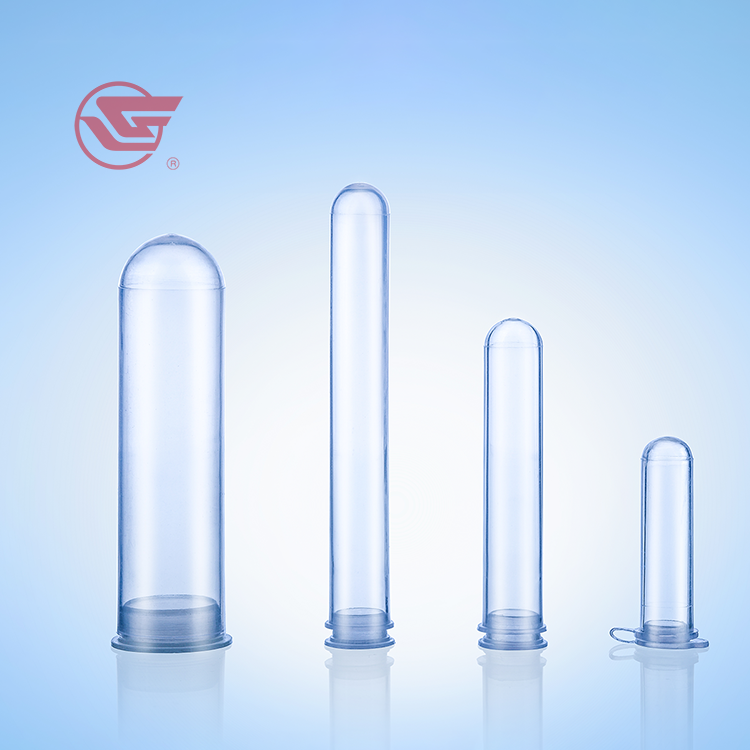
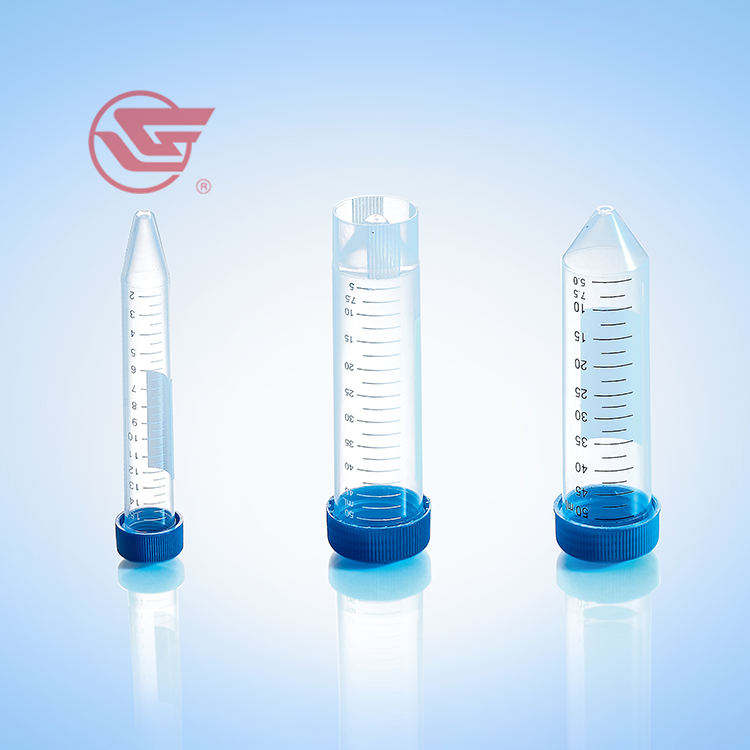
Gongdong offers multiple centrifuge tube sizes and configurations for laboratory sample processing.
Specification | 15ml | 50ml |
|---|---|---|
Material | PP | PP |
Bottom | Conical | Conical / Self-standing |
Maximum Centrifugal Force | Up to 9,000G | Up to 7,000G |
Sterility | Sterile | Sterile |
RCF is one of the most important specifications for centrifuge tube selection.
When reviewing RCF information, confirm:
Maximum published centrifugal force
Tube size and geometry
Rotor and adapter compatibility
Operating temperature
Manufacturer instructions for use
Do not use one RCF value for every tube size or configuration. Performance should be checked for the specific product.
Cap and thread quality affect sample handling, storage, and centrifugation.
A basic closure inspection should cover:
Smooth cap engagement
No cross-threading
Secure closure
No visible leakage under intended use conditions
Compatibility with required storage and operating temperatures
Tube body and cap materials should always be evaluated as a complete system.
Different laboratory applications require different levels of contamination control.
Depending on the workflow, specifications may include:
Sterile packaging
RNase/DNase-free requirements
Pyrogen or endotoxin control
Human DNA-free requirements
Other application-specific purity specifications
These requirements should be confirmed through the applicable product documentation rather than assumed from the word "sterile" alone.
QC Item | What to Review |
|---|---|
Material | Material type, consistency, and chemical suitability |
Dimensions | Tube diameter, length, bottom geometry, and rotor fit |
RCF | Published limit for the exact tube specification |
Cap | Thread fit, closure stability, and leakage |
Graduations | Clarity, consistency, and readability |
Sterility | Confirm the specification required by the application |
Documentation | Technical data, quality records, and applicable certifications |
Packaging | Package integrity, quantity, labeling, and storage requirements |
Consistent quality across repeat orders is important for laboratories that use centrifuge tubes in standardized workflows.
Before bulk procurement, consider reviewing:
Product technical specifications
Applicable quality certificates
Batch or lot traceability information
Packaging and labeling consistency
Sample performance from representative production lots
For critical applications, laboratories may also request additional quality documentation according to their own internal procedures.
Representative product samples can help laboratories verify compatibility before switching suppliers or placing large orders.
Sample evaluation may include:
Visual inspection: Check molding, graduations, tube shape, and cap fit.
Centrifuge compatibility: Confirm the tubes fit the intended rotors and adapters.
Routine performance: Test the tubes under the laboratory's normal operating conditions.
Packaging review: Confirm package integrity and labeling.
Documentation review: Compare supplied technical information with purchasing requirements.
Testing should follow the laboratory's approved procedures and the manufacturer's published product limits.
Product quality should remain consistent when order volume increases.
Supplier evaluation can include:
Manufacturing and quality-control capability
Production capacity
Lead time
Inventory and supply continuity
Technical and after-sales support
Gongdong's centrifuge and cryo tube range includes multiple tube capacities and configurations for laboratory sample processing and storage.
Centrifuge tube quality control should cover material, molding, RCF, sealing, sterility, dimensions, and batch consistency.
Before bulk purchasing, review the technical specification and validate representative samples under your laboratory's approved operating conditions.
For centrifuge tube specifications, samples, quality documentation, packaging options, or laboratory consumable sourcing requirements, contact Zhejiang Gongdong® Medical Technology Co., Ltd.
A: Check material, molding, tube dimensions, RCF, cap sealing, graduations, sterility, packaging, and applicable documentation.
A: RCF represents the actual centrifugal force applied to the tube and helps laboratories determine whether a product is suitable for their centrifugation conditions.
A: No. Sterility and nuclease-free specifications are different requirements. Confirm each claim separately using the applicable product documentation.
A: Yes. Representative samples can help confirm fit, handling, sealing, and compatibility with the laboratory's routine workflow.
A: Review the technical datasheet, product specifications, applicable quality certificates, batch information, and any additional documentation required by your laboratory.