Views: 0 Author: Site Editor Publish Time: 2026-07-06 Origin: Site
Respiratory specimen collection directly affects diagnostic speed and sample quality.
Poor sputum samples may be rejected because of saliva contamination, low volume, or improper transport.
This guide compares suction mucus traps and standard sputum containers. It helps buyers and clinical teams choose the right collection method for different patient conditions.
Patient capability dictates the tool: Standard containers require alert and cooperative patients. Mucus traps are more suitable for intubated, neurologically compromised, pediatric, or very weak patients.
Contamination risks differ: Expectoration may introduce oral flora. Suction traps may damage cells if vacuum pressure is too high.
Hardware matters: Both methods require a leak-proof specimen container for safe handling, transport, and lab accessioning.
Cost vs. Yield: Mucus traps cost more and require clinical operation, but they may improve diagnostic yield in complex patient groups.
The main challenge in respiratory diagnostics is separating true lower respiratory sputum from saliva.
If the patient does not cough deeply enough, the lab may receive mostly oral secretions. This can reduce diagnostic value and increase rejection risk.
Laboratories often check sputum quality under a microscope. A high number of squamous epithelial cells usually indicates saliva contamination.
When a sample is rejected, the clinical team must repeat the sputum collection process.
This wastes nursing time, delays culture results, and may affect antibiotic decisions.
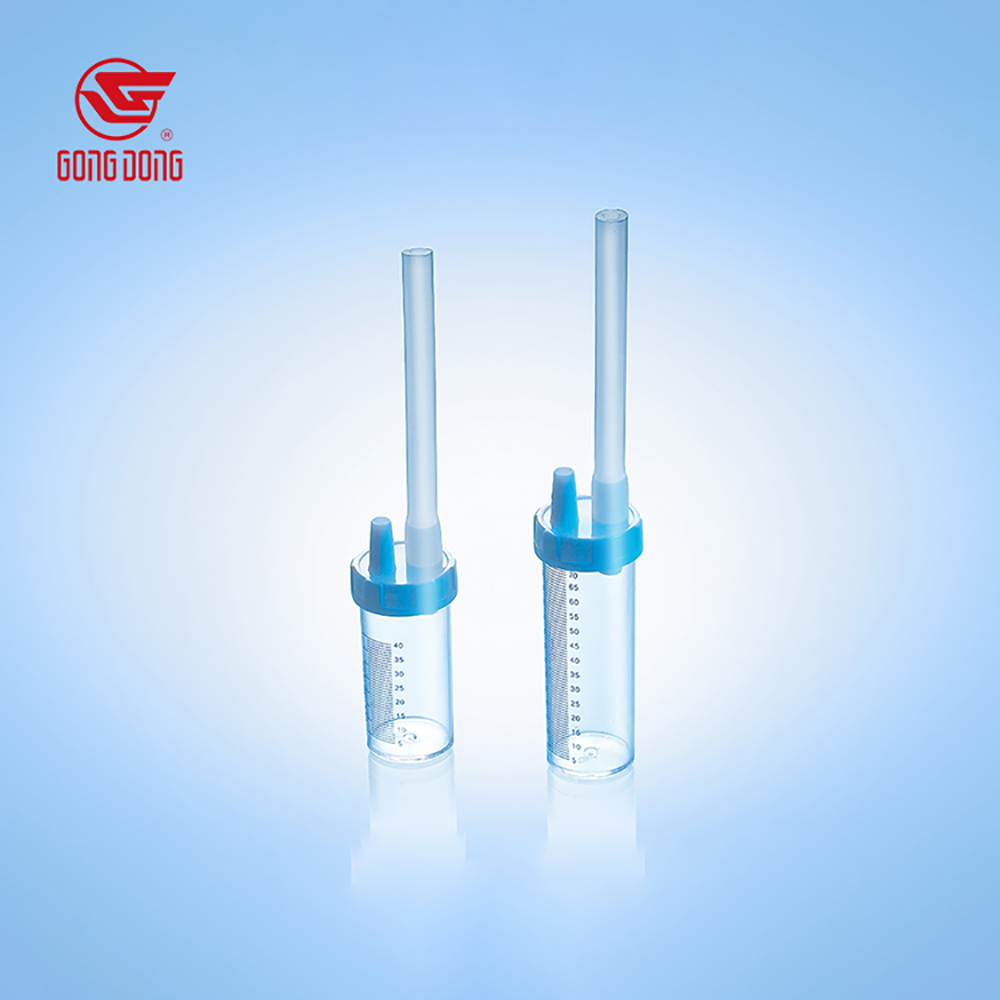
A suction mucus trap is an active collection device used with a vacuum source and suction catheter.
It helps collect secretions directly from the airway. This can reduce oral contamination when used correctly.
This method is suitable for mechanically ventilated, unconscious, pediatric, neonatal, or very weak patients.
These patients may not be able to produce a valid sputum sample by coughing into a cup.
A standard mucus trap often provides 40cc to 80cc capacity.
Clear markings help staff check collected volume. Tight tubing connectors help maintain a closed collection pathway.
Implementing active suctioning introduces specific clinical risks:
Iatrogenic infections: Staff must maintain aseptic technique. Breaking the sterile field may introduce pathogens into the lower airway.
Mechanical cellular lysis: Excessive suction pressure may damage cells or bacteria. This can affect culture quality.
Mucosal trauma: Aggressive suctioning may damage airway tissue and contaminate the suction mucus trap with blood.
Standard sputum containers are used for passive expectoration.
They are simple, sterile, single-use cups for patients who can cough deeply and follow instructions.
This method is widely used in outpatient clinics, emergency departments, and general wards.
A quality respiratory specimen container should have a wide opening.
This helps patients deposit thick sputum more easily and reduces spillage.
Common capacities range from 50ml to 120ml. Clear volume markings help staff check whether the sample meets lab requirements.
Patient education is the key risk in passive collection.
Hospitals must enforce the "rinse, breathe, cough" protocol:
Rinse: The patient rinses the mouth with plain water. This helps remove saliva and food particles.
Breathe: The patient takes three slow, deep breaths to loosen lower airway secretions.
Cough: On the third breath, the patient makes a deep cough from the diaphragm.
Expectorate: The patient deposits the sample directly into the cup without touching the sterile inner rim.
Exterior contamination is another risk.
If sputum touches the outside threads or cup surface, staff should wipe the container and place it into a secondary biohazard transport bag.
There is no single best device for every patient.
The right choice depends on patient condition, staff resources, diagnostic yield, and biosafety needs.
Evaluation Metric | Active Suction Device | Passive Expectoration Container |
|---|---|---|
Diagnostic Yield & Purity | High. It bypasses the oral cavity and helps reduce squamous cell contamination. | Variable. Saliva contamination is more likely if instructions are not followed. |
Staff Time & Resources | High. It requires trained staff to prepare equipment and perform suctioning. | Low. Capable patients may collect the sample with limited supervision. |
Patient Experience | Invasive and uncomfortable. It may trigger gag reflex or short-term oxygen changes. | Non-invasive and simple. The patient can collect the sample independently. |
Target Department | Intensive Care Units, Neonatal ICU, and emergency resuscitation settings. | Outpatient clinics, general wards, and urgent care settings. |
Transport safety is important for both methods.
Whether using a suction trap or a standard cup, the device should function as a reliable leak-proof specimen container.
Strong threading, secure caps, and pressure-resistant plastic help protect samples during hospital transport.
Procurement should consider the cost of failure, not only the unit price.
A low-cost cup may become expensive if it causes repeated sample rejection, delayed testing, or extra staff work.
Collection devices must protect the sample after collection.
Many hospitals use pneumatic tube systems. Containers may face pressure changes, vibration, and impact during transport.
Buyers should prioritize secure caps, cross-threading prevention, and pressure-resistant sealing.
A 95kPa pressure rating can help confirm that the container is suitable for air-pressure transport conditions.
Transit time also matters.
Respiratory specimens are commonly sent to the lab at room temperature within two hours. If immediate transport is not possible, refrigeration at 2°C to 8°C may help preserve sample quality for a limited period.
Standardized labeling also improves lab accessioning.
Barcode-friendly surfaces, transparent walls, and consistent cap design help technicians scan, sort, and process samples more efficiently.
Respiratory specimen collection should match the patient’s condition.
A standard sputum container is suitable for alert and cooperative patients. A suction mucus trap is more suitable for patients who cannot produce a valid deep-cough sample.
Hospitals should review rejection data, identify the main causes of failed samples, and standardize device selection by patient group.
For procurement, key factors include leak-proof sealing, clear volume markings, compatible capacity, safe transport performance, and stable supply.
For sputum container or mucus trap requirements, you can contact Gongdong Zhejiang Gongdong® Medical Technology Co., Ltd. to share your needs.
A: Usually, passive sputum collection is preferred for alert and cooperative patients.
A mucus trap may be considered only when the patient cannot produce a productive cough despite guidance and support.
A: It should have leak-proof sealing, a secure screw cap, pressure-resistant plastic walls, and good cross-threading prevention.
A 95kPa pressure rating is often used to support safer transport performance.
A: The required volume depends on the laboratory method.
In many routine workflows, a small amount of true lower respiratory sputum is more useful than a large volume of saliva-contaminated material.