
Views: 0 Author: Site Editor Publish Time: 2026-02-16 Origin: Site
Have you ever wondered how cells manage to stick to culture flasks? This process is vital for their survival and growth in research. In this article, we will explore how cells adhere to culture flasks, focusing on the mechanisms and factors that influence it. You'll also learn how to improve cell attachment for better experimental results.
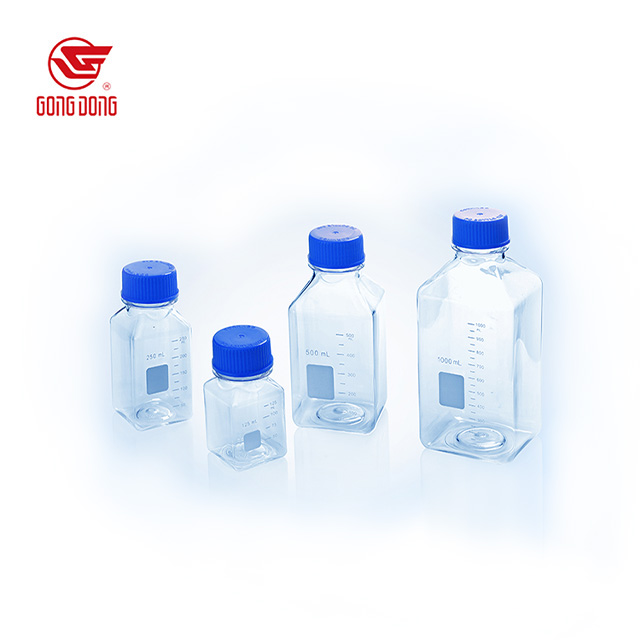
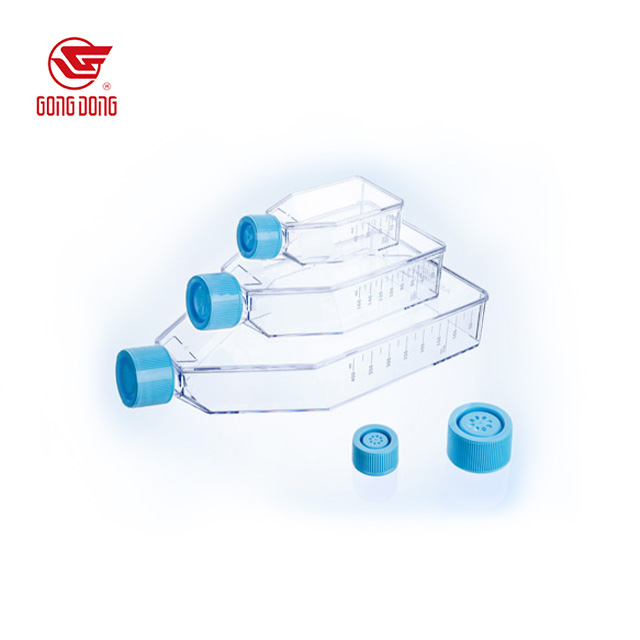
Cell culture flasks are laboratory tools used to grow and maintain cells in a controlled environment. Typically made of clear plastic or glass, these flasks provide a space for cells to grow on a surface, and they often feature a flat base to allow the cells to adhere efficiently.
The materials used to make cell culture flasks are usually non-toxic and sterile, designed to create an ideal environment for cell growth. Plastic is the most commonly used material due to its lightweight, shatterproof nature, and versatility. Glass, on the other hand, is used when researchers require more precise control over the surface, particularly for sensitive cell lines.
Material Type | Advantages | Disadvantages |
Plastic | Lightweight, shatterproof, inexpensive | Less control over surface properties |
Glass | More precise surface control, reusable | Heavier, more expensive, fragile |
There are several types of culture flasks, each designed for specific applications. Some of the common ones include:
● Tissue culture flasks: These are standard flasks with a flat base, typically used for growing adherent cells.
● Spinner flasks: Used for culturing cells in suspension or for promoting cell growth in liquid media.
● Multi-well plates: Smaller, more compact versions of culture flasks, typically used for high-throughput experiments.
Each type is suited for different types of cell culture, depending on whether the cells need to adhere to the surface or grow suspended in media.
Flask Type | Common Use Case | Key Feature |
Tissue Culture Flask | Adherent cell culture, general use | Flat surface for cell attachment |
Spinner Flask | Suspension cultures or large-scale growth | Stirring mechanism for uniform growth |
Multi-Well Plate | High-throughput screening | Multiple smaller wells for parallel experiments |
Surface coatings play an essential role in improving cell adhesion. They modify the physical and chemical properties of the flask's surface to enhance the interaction between cells and the flask. Coatings such as collagen, fibronectin, or poly-L-lysine are often used to promote cell attachment, especially for cells that are difficult to culture or require special conditions.
Cell adhesion is the process by which cells attach to surfaces, and it is essential for maintaining their function and shape. The cell's surface contains specialized proteins called integrins that interact with the extracellular matrix (ECM) on the culture flask’s surface. These interactions trigger signals inside the cell, causing structural changes that help anchor the cell.
The adhesion process starts when integrins bind to ECM proteins like fibronectin, collagen, and laminin, which are often used as surface coatings on culture flasks. This binding activates intracellular pathways that help the cell anchor itself to the surface and spread out to form a stable attachment.
ECM proteins are crucial for cellular adhesion. They form a mesh-like structure that provides mechanical support and biochemical cues necessary for cell attachment. When cultured on coated surfaces, cells interact with these ECM proteins, allowing them to attach more firmly to the flask.
ECM Protein | Cell Types It Supports | Effect on Cell Attachment |
Collagen | Fibroblasts, epithelial cells | Promotes strong adhesion and spreading |
Fibronectin | Various cell types | Enhances migration and proliferation |
Laminin | Neuronal cells, epithelial cells | Supports attachment and differentiation |
The temperature and environmental conditions in which the cell culture is maintained can significantly impact cell adherence. Cultures are usually kept at 37°C (human body temperature) to support optimal growth. However, variations in temperature, humidity, and CO2 levels can affect the cell's ability to adhere to the flask.
Inconsistent temperature can disrupt cellular signaling and metabolic processes, leading to poor cell attachment. Maintaining a stable CO2 environment (typically 5% CO2) ensures proper pH levels in the culture media, which is vital for maintaining cell adhesion.
Surface treatments such as collagen, fibronectin, and poly-L-lysine are applied to culture flasks to promote adhesion. These treatments mimic the natural extracellular matrix and are tailored to the specific needs of different cell types.
For instance, poly-L-lysine is often used for neuronal cells, while fibronectin is more suitable for fibroblasts. These surface treatments can significantly improve the rate and strength of cell attachment, especially for cells that are typically difficult to culture.
Surface Treatment | Common Applications | Benefits |
Collagen | Fibroblasts, endothelial cells | Strong, stable adhesion |
Fibronectin | Epithelial cells, fibroblasts | Promotes cell migration and spreading |
Poly-L-lysine | Neuronal cells, various difficult-to-adhere cells | Enhances neuronal attachment |
Different cell types have varying adhesion requirements. For instance, epithelial cells may adhere more readily to collagen-coated surfaces, while neuronal cells may require poly-L-lysine to form stable attachments. Understanding these specific requirements is crucial for selecting the right surface treatment to optimize cell adherence.
Certain stem cells also have unique adhesion needs, depending on whether they are in a pluripotent or differentiated state. Research into specific adhesion molecules and their interactions with the culture flask can help improve success rates in cell culture.
When cells fail to adhere to culture flasks, the consequences can be significant, including poor growth, instability, and in some cases, cell death. Proper attachment is crucial for maintaining cell viability and supporting ongoing cellular processes, such as division and differentiation. Without strong attachment, cells may become dislodged from the flask's surface, leading to contamination or inaccurate experimental results. Several factors can contribute to poor cell attachment, and identifying the root cause is essential for troubleshooting.
1. Inadequate Surface Coatings: Surface coatings are applied to culture flasks to improve the attachment of cells. These coatings, such as collagen, fibronectin, or poly-L-lysine, mimic the extracellular matrix (ECM) and provide the necessary biochemical cues for cell adhesion. If the coating is either too thin or inappropriate for the specific cell type being cultured, cells will struggle to bind to the surface. For example, epithelial cells may require collagen, while neuronal cells might need poly-L-lysine. An insufficient or incompatible coating can result in weak cell attachment or a complete failure to adhere.
2. Incorrect pH or CO2 Levels: Cells require precise environmental conditions to thrive, and small deviations from the optimal conditions can disrupt their ability to attach and grow. The pH of the culture media is particularly critical, as cells depend on a stable pH environment for proper metabolic functioning. A significant shift in pH can affect cellular signaling pathways, including those involved in adhesion. Similarly, CO2 levels play an essential role in regulating the pH of the media, and inadequate CO2 concentrations can lead to instability in the culture environment. Without these factors in balance, cells may fail to adhere properly to the flask surface.
3. Suboptimal Media Composition: The composition of the culture media is another important factor affecting cell adhesion. Media typically contains a mixture of nutrients, salts, amino acids, vitamins, and growth factors that support cellular functions. If the media lacks essential nutrients or growth factors required for a specific cell type, the cells may fail to attach or proliferate efficiently. For instance, certain cells require specific growth factors like epidermal growth factor (EGF) or insulin-like growth factor (IGF) for optimal attachment and growth. Inadequate media composition can lead to poor cell adherence and overall poor health of the culture.
Once the underlying causes of poor cell attachment are identified, several solutions can be implemented to improve the situation and enhance cell adhesion to culture flasks.
1. Optimize Surface Coatings:One of the first strategies to improve cell adhesion is to optimize the surface coatings applied to the culture flasks. It is essential to choose a coating that aligns with the specific requirements of the cell type being cultured. For example, cells like fibroblasts respond well to collagen, while endothelial cells may require fibronectin. Researchers can experiment with different concentrations and types of ECM proteins to determine the best coating for the cells they are working with. Pre-coating the flasks with these proteins will increase the likelihood of successful cell attachment. Additionally, ensuring that the coating is applied evenly across the entire surface of the flask is crucial for uniform cell attachment.
2. Control Environmental Conditions:Maintaining optimal environmental conditions is essential for improving cell adherence. Cells need to be cultured in a stable environment with the correct temperature, humidity, and CO2 levels to support proper adhesion and growth. Typically, 37°C is the optimal temperature for mammalian cell culture, closely mimicking human body temperature. Deviations from this temperature can lead to cell stress, weakening adhesion. Similarly, it is crucial to ensure that CO2 levels remain at around 5% to maintain the correct pH in the media. Any fluctuations in these conditions may lead to a weakened or unstable cell attachment. Humidity levels should also be monitored, as improper humidity can lead to changes in evaporation rates and media composition, which can disrupt cell attachment.
3. Enhance Media Composition:Adjusting the composition of the culture media can also improve cell adherence. Ensuring that the media contains the correct combination of nutrients, growth factors, and hormones is essential for maintaining healthy cells. Researchers can supplement the media with specific factors such as insulin, fetal bovine serum (FBS), or epidermal growth factor (EGF), depending on the cell type. These growth factors not only promote cell survival and proliferation but also support the signaling pathways involved in cell adhesion. Media adjustments should be made based on the specific needs of the cultured cells, and optimizing the media can significantly improve cell attachment and overall culture health.
By combining these strategies, researchers can address the underlying causes of poor cell attachment and ensure successful cell culture experiments. Proper surface coatings, optimal environmental conditions, and well-composed media can enhance the cell's ability to adhere to the flask, ensuring stable cultures and more reliable experimental outcomes.
Understanding how cells adhere to culture flasks is crucial for optimizing cell culture experiments. By selecting the right flasks, coatings, and media, and by controlling environmental conditions, researchers can ensure successful cell attachment and growth. Whether you’re working with adherent cells or suspension cultures, optimizing these factors will lead to better experimental outcomes and a more efficient research process. For high-quality cell culture flasks and other lab equipment, Zhejiang Gongdong® Medical Technology Co., Ltd. provides reliable solutions to meet your research needs.
A: Cells adhere to culture flasks through interactions between integrins on their surface and extracellular matrix (ECM) proteins like collagen and fibronectin. These interactions trigger signaling pathways that stabilize the cell's attachment to the flask.
A: Cell culture flasks are typically made of clear plastic or glass. Plastic is commonly used due to its lightweight nature, while glass is preferred for precise surface control in sensitive experiments.
A: Proper cell adherence is critical for cell survival, growth, and differentiation. It allows cells to spread and form stable cultures, which are essential for accurate experimental results in cell biology studies.
A: To improve cell adhesion, use surface coatings like collagen or poly-L-lysine, maintain proper environmental conditions (temperature, CO2 levels), and ensure the media contains necessary nutrients and growth factors.


