Views: 0 Author: Site Editor Publish Time: 2026-01-19 Origin: Site
A Serological Pipette is essential in laboratories for accurate liquid transfers. It simplifies routine tasks in biology, chemistry, and clinical testing. This guide will explain its purpose, how it works, and tips for effective use. You'll also learn about common mistakes and maintenance to ensure consistent results.
A Serological Pipette is a graduated pipette for milliliter-scale transfers.It measures and delivers liquid using visible graduation marks.It usually pairs with a pipette controller for aspiration and dispensing.
It suits larger volumes than micropipettes.It is faster for media prep, buffer transfers, and routine dilutions.Many models are “blow-out,” so they deliver the last drop.
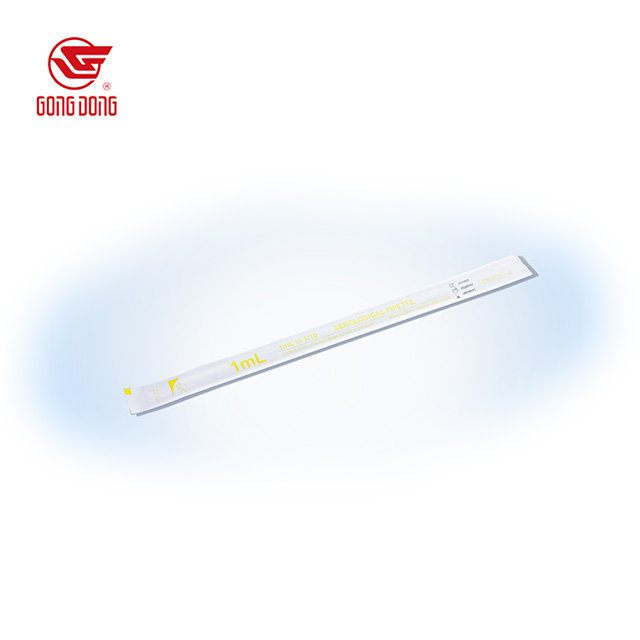
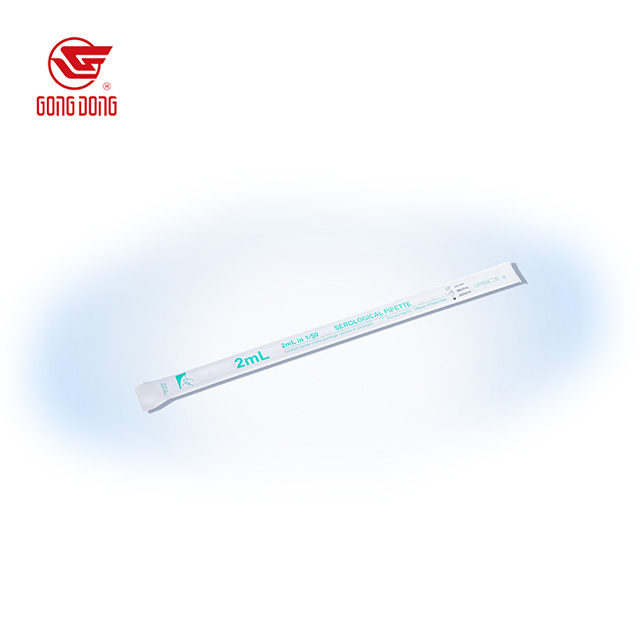
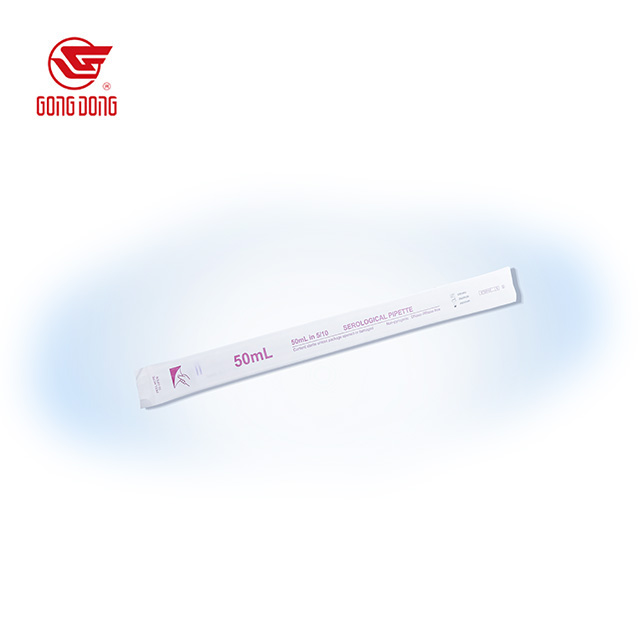
It has a long shaft, printed volume scale, and tapered dispensing tip.Most have color-coded bands to help identify capacity quickly.Many are sterile and individually wrapped for aseptic workflows.
Glass versions are reusable and resist many solvents.Plastic versions are disposable and reduce cross-contamination risk.Most cell culture labs prefer sterile plastic to protect samples.
Table 1 — How a Serological Pipette compares to common alternatives
Tool | Typical volume range | Best for | Accuracy level (general) | Needs controller? | Blow-out common? |
Serological Pipette | 1–50 mL | Media transfer, dilutions, routine aliquots | Medium to high (depends on technique) | Yes | Yes |
Micropipette | 0.1–1000 µL | Small reagents, enzymes, PCR setup | High | No | No |
Volumetric pipette | Fixed volume (often 5–50 mL) | High-accuracy single-volume delivery | Very high | Often no (can use bulb) | No |
Validation required: exact accuracy specs vary by brand, tolerance class, and calibration standard.
These show incremental volume markings along the shaft.They let us measure different volumes using one pipette size.They are common for general lab transfers and solution prep.
These require expelling the final liquid in the tip.They improve delivery consistency for viscous or clinging liquids.They are also common in cell culture media handling.
Sterile pipettes fit aseptic workflows like cell culture.Non-sterile pipettes fit chemistry prep or noncritical transfers.We should match sterility to contamination risk and cost goals.
Table 2 — Common Serological Pipette sizes and typical use cases
Size | Common graduation step | Typical lab use | Notes |
1 mL | 0.01–0.1 mL | Small aliquots, supplements | Good for tighter control |
5 mL | 0.1 mL | Reagent transfer, small dilutions | Very common in R&D labs |
10 mL | 0.1–0.2 mL | Media supplements, wash steps | Balanced speed and control |
25 mL | 0.5 mL | Media prep, buffer transfers | Fast for routine pours |
50 mL | 1.0 mL | Bulk media transfer | Higher error risk if rushed |
Validation required: graduation steps vary across manufacturers.
They support buffer making, solution mixing, and sample aliquoting.They also speed up plate feeding and wash workflows.Many QA teams use them for routine, repeatable transfers.
They help move media without touching vessel rims.They support sterile technique inside a biosafety cabinet.They reduce splash risk during aspiration and dispensing.
They fit high-volume, repeatable steps across multiple operators.They also help standardize training in regulated environments.They can lower consumable complexity across shared lab spaces.
1. Choose the correct pipette size for the target volume.
2. Confirm sterility needs before opening the wrapper.
3. Insert it firmly into the pipette controller nose cone.
4. Aspirate slowly to the desired graduation line.
5. Check for bubbles and re-aspirate if needed.
6. Dispense against the vessel wall for smoother flow.
7. For blow-out types, expel the last drop intentionally.
Hold it near vertical during aspiration.Keep the tip submerged slightly under the liquid surface.Use a steady thumb pressure on the controller.Pause briefly after aspiration to stabilize the meniscus.
Fast aspiration creates bubbles and volume error.Tilting during reading shifts the meniscus and scale reading.Touching non-sterile surfaces risks contamination in culture work.
If bubbles appear, dispense back and retry slowly.If volume looks off, confirm the correct graduation direction.If dripping occurs, check the controller seal and filter.
Table 3 — Frequent Serological Pipette issues and fast fixes
Problem | What you see | Likely cause | Fast fix |
Air bubbles | Gaps in liquid column | Aspirated too fast | Aspirate slower, keep tip deeper |
Under-delivery | Volume lower than expected | Forgot blow-out step | Blow out final drop for blow-out pipettes |
Dripping | Liquid leaks from tip | Controller seal worn | Reseat pipette, inspect gasket/filter |
Contamination risk | Cloudy cultures later | Non-sterile contact | Use sterile pipettes, avoid rim contact |
Inconsistent readings | Different operators differ | Meniscus misread | Train on eye-level reading method |
Disposable plastic pipettes are usually single-use.Reusable glass pipettes need cleaning after each session.
Autoclaving supports many glass pipette workflows.Some plastics deform under heat and need alternatives.
Store pipettes dry to avoid residue films.Audit controller filters on a defined schedule.Log deviations when results show unexpected variance.
Glass pipettes break easily under side pressure.Use gloves and eye protection during chemical transfers.
Use sterile pipettes for cell culture and microbiology work.Do not reuse disposable pipettes across samples.
Standardize training and technique across shifts.Use checklists for high-risk workflows and audits.Keep spares ready to prevent rushed, unsafe workarounds.
A Serological Pipette supports fast, accurate liquid transfer at scale. It fits routine lab work, especially in cell culture environments. Technique matters as much as the tool itself. Use the right size, aspirate slowly, and read the meniscus at eye level. Maintain controllers, follow sterility rules, and document deviations. These habits protect accuracy, compliance, and team productivity.
Comment: For B2B labs, standardize one Serological Pipette SOP per workflow to reduce operator variance.
Manufactured by Zhejiang Gongdong® Medical Technology Co., Ltd., our high-quality serological pipettes ensure precision and reliability in every use. Ready to streamline your lab processes? Order now and experience top-tier performance in your workflow.
A: A serological pipette is a laboratory tool used to measure and transfer precise volumes of liquid. It is typically made from glass or plastic and is graduated to allow for accurate liquid measurement. The serological pipette is designed for various applications, including media preparation, dilutions, and reagent transfers.
A: To use a serological pipette, first attach it to a pipette controller. Draw the liquid into the pipette up to the desired graduation mark, then dispense it carefully into your container. For blow-out pipettes, be sure to expel the last drop to ensure full delivery of the measured volume.
A: A serological pipette ensures accuracy and consistency in liquid transfer, making it essential for scientific experiments. It is particularly important in applications such as cell culture, biological research, and chemical analysis, where precise measurements are crucial for reliable results.
A: The main benefits of using a serological pipette include its precision in liquid measurement, the ability to handle various liquid types, and its versatility in different laboratory settings. It is particularly useful for experiments requiring accurate volume transfers.