Views: 0 Author: Site Editor Publish Time: 2025-11-17 Origin: Site
The Petri dish is one of the most iconic and indispensable tools in the scientific world. Whether in a school laboratory, a diagnostic center, or a high-tech research facility, this simple round plate continues to play a vital role in cultivating, observing, and analyzing microorganisms. Its versatility and reliability make it one of the most essential laboratory consumables across scientific disciplines.
This article explores the definition, history, types, and diverse uses of Petri dishes, how they are made, how they should be handled, and why they remain a cornerstone of modern laboratory science.
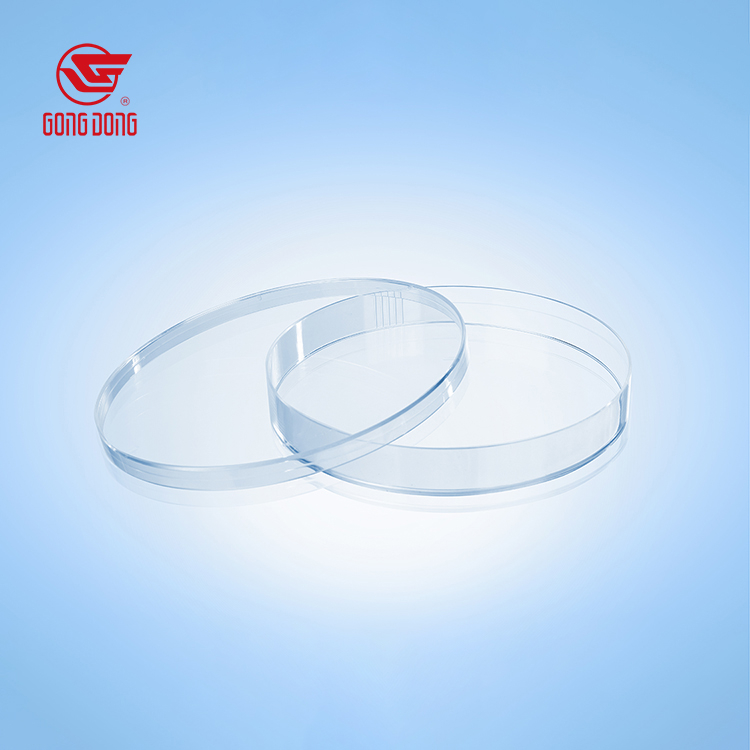
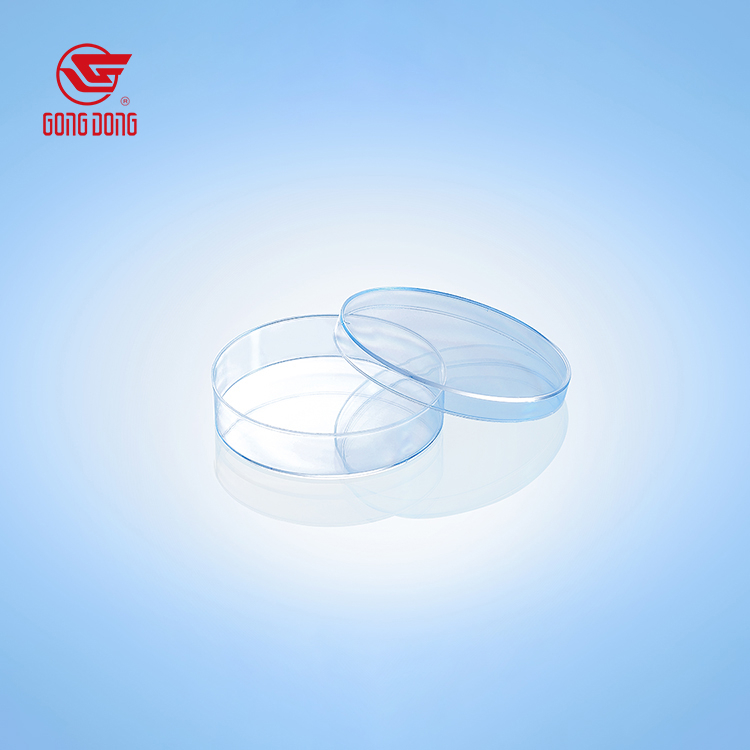
A Petri dish—also known as a culture dish or cell-culture plate—is a shallow, flat, circular container traditionally made from glass or plastic. It usually comes with a loosely fitting lid that prevents contamination while still allowing airflow for the microorganisms inside.
The dish was invented by German bacteriologist Julius Richard Petri in the late 19th century as an improvement on earlier culture methods used by Robert Koch. His invention simplified the process of observing microbial growth, revolutionizing the field of microbiology.
Today, Petri dishes are used not only in microbiology but also in cell culture, tissue engineering, environmental testing, and chemical analysis, making them a foundational component among laboratory consumables.
Modern Petri dishes are made from two primary materials—glass and plastic, each with its advantages and applications.
Glass Petri dishes, typically made from borosilicate glass, are heat-resistant, durable, and reusable. They are ideal for laboratories equipped with autoclaves for sterilization. Because glass can withstand repeated heating, these dishes are perfect for experiments that require temperature control or chemical resistance.
Plastic Petri dishes, on the other hand, are lightweight, disposable, and cost-effective. They are usually manufactured from polystyrene or polypropylene, offering excellent clarity for microscopic observations. In most clinical and diagnostic settings, plastic dishes are preferred because they eliminate the risk of cross-contamination.
Among the extensive range of laboratory consumables, plastic Petri dishes stand out for their hygienic advantages and adaptability to automated laboratory systems.
The Petri dish is a universal vessel for growing and observing microorganisms, but its applications extend far beyond that.
The primary use of a Petri dish is to cultivate bacteria, fungi, and other microorganisms. Scientists prepare a nutrient-rich agar medium, pour it into the dish, and allow it to solidify. Once inoculated with a sample, microorganisms grow into visible colonies that can be counted, isolated, or tested.
This application is fundamental in medical diagnostics, environmental monitoring, and food safety testing.
Petri dishes also serve as essential tools for cell culture—the process of growing animal or human cells outside the body. In biomedical research, scientists use specially treated Petri dishes to support cell adhesion and proliferation. These experiments contribute to breakthroughs in drug discovery, vaccine development, and cancer research.
In botanical studies, Petri dishes are used for plant tissue culture, where small tissue samples are grown into complete plants under sterile conditions. This technique helps scientists propagate rare or genetically modified plant species efficiently.
Petri dishes are also critical in environmental testing. For instance, they are used to collect air, water, or surface samples in hospitals, pharmaceutical plants, and food production areas to monitor microbial contamination.
In educational institutions, Petri dishes are a staple among laboratory consumables used for teaching microbiology. They allow students to visualize microbial growth and learn sterile techniques in hands-on laboratory sessions.
Producing high-quality Petri dishes involves precise engineering, clean manufacturing environments, and strict quality control.
Material Selection: Medical-grade resins or borosilicate glass are chosen to ensure clarity and purity.
Injection Molding: For plastic dishes, molten resin is injected into precision molds to achieve consistent wall thickness.
Assembly and Packaging: The lid and base are matched, inspected, and sealed under cleanroom conditions to prevent contamination.
Sterilization: Depending on the product, dishes may be sterilized using ethylene oxide gas, gamma radiation, or autoclaving.
Leading manufacturers like Gongdong operate in ISO-certified cleanrooms to produce Petri dishes and other laboratory consumables that meet international quality standards such as ISO13485 and CE.
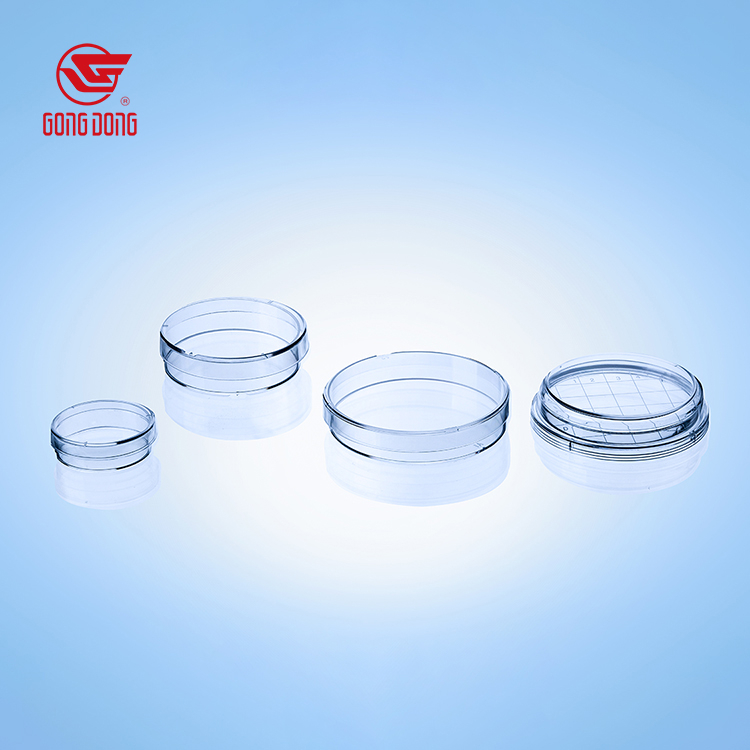
Depending on the application, Petri dishes come in various designs and configurations.
Standard Petri Dishes: The classic round design, ideal for general microbial culture.
Vented Petri Dishes: Include small ventilation slots that improve gas exchange, supporting aerobic microbial growth.
Non-vented Petri Dishes: Sealed designs used for anaerobic cultures where oxygen exposure must be minimized.
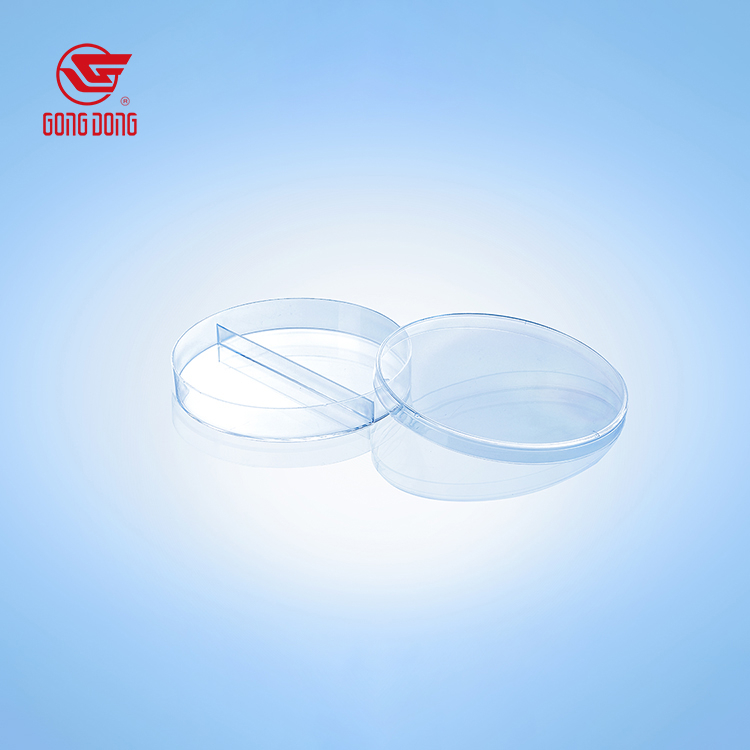
Divided Petri Dishes: Feature partitions that allow multiple samples to be grown separately in the same dish.
Treated Surface Petri Dishes: Common in cell culture applications, where the surface is modified for enhanced cell attachment.
Each variant serves specific scientific purposes and adds to the diversity of laboratory consumables in research environments.
Proper technique is essential for accurate results and to maintain sterile conditions.
Always work near a flame or laminar flow hood to reduce airborne contamination.
Label dishes clearly with sample details and date before inoculation.
Seal dishes properly using parafilm or tape to prevent contamination.
Incubate at controlled temperatures appropriate for the microorganism.
Dispose of used dishes responsibly, following biosafety protocols.
Since Petri dishes often contain live microorganisms, safe disposal is crucial.
Used dishes should be:
Collected in biohazard bags,
Sterilized by autoclaving or chemical disinfection,
Disposed of through approved biohazard waste channels.
Following these steps ensures laboratory safety and environmental compliance.
High-quality laboratory consumables—such as Petri dishes, pipette tips, and specimen containers—play a crucial role in ensuring the reliability of scientific outcomes.
Inferior materials or poor manufacturing can lead to contamination, inconsistent results, or experimental failure.
Therefore, researchers and clinical professionals often rely on trusted suppliers who meet global standards in precision molding, cleanroom production, and quality assurance.
Gongdong is a leading manufacturer of laboratory consumables with over 40 years of experience in medical and research supply manufacturing.
Their Petri dishes are produced in ISO-certified cleanrooms, using high-grade resins to ensure clarity, uniformity, and durability.
Key Advantages:
Crystal-clear transparency for accurate observation
Reliable lid fit to minimize contamination
Uniform wall thickness and structural stability
Available in multiple sizes and designs
OEM and custom manufacturing support
With over 100 injection molding machines and fully automated lines, Gongdong ensures consistent product quality and fast delivery across global markets. The company serves clients in 130+ countries, partnering with leading brands like McKesson, IDEXX, and Thermo Fisher.
By choosing Gongdong Petri Dishes, laboratories around the world achieve better precision, safety, and reproducibility in their work.
1. What is a Petri dish mainly used for?
A Petri dish is used to culture and observe microorganisms, including bacteria and fungi, under controlled conditions. It is essential for microbiological, educational, and clinical applications.
2. Can Petri dishes be reused?
Glass Petri dishes can be sterilized and reused, while plastic Petri dishes are disposable and designed for single use to avoid contamination.
3. What material is best for Petri dishes?
For general laboratory use, polystyrene plastic provides clarity and convenience. For experiments requiring heat resistance, borosilicate glass is ideal.
4. How should Petri dishes be stored?
Store them in a clean, dry environment, away from direct sunlight or heat. Sterile dishes should remain sealed until use.
5. Does Gongdong offer custom Petri dishes?
Yes. Gongdong provides OEM and customized laboratory consumables, including Petri dishes designed to meet specific research and diagnostic requirements.