
Views: 0 Author: Site Editor Publish Time: 2026-06-15 Origin: Site
Modern urine collection requires cleaner and safer transfer workflows.
Traditional open-cup transfer can cause spills, contamination, inconsistent volume, and staff exposure risk.
This guide explains how to evaluate closed urine transfer devices, vacuum urine tubes, and related urine collection systems for clinical and laboratory workflows.
Implementing a closed urine transfer process can reduce pre-analytical contamination and help protect clinical staff from biohazard exposure.
Device selection should match downstream testing needs, such as routine urinalysis or culture and sensitivity testing.
Vacuum consistency, material stability, and needle safety are important for reliable clinical use.
Procurement should compare unit cost with total workflow value, including fewer rejected samples and improved handling efficiency.
Traditional open-cup transfer creates several workflow risks.
Spillage during handling or transport can expose staff to biohazards. Manual pouring may also create inconsistent sample volume.
When a lid is opened, the sample may be exposed to environmental contamination. This can affect urine specimen collection integrity.
Poor transfer practices may increase false-positive culture results, repeat collection, and diagnostic delays.
Closed transfer methods help reduce manual pipetting, open pouring, aerosol risk, and countertop contamination.
For hospitals and laboratories, this supports safer handling and more standardized pre-analytical control.
 |  | 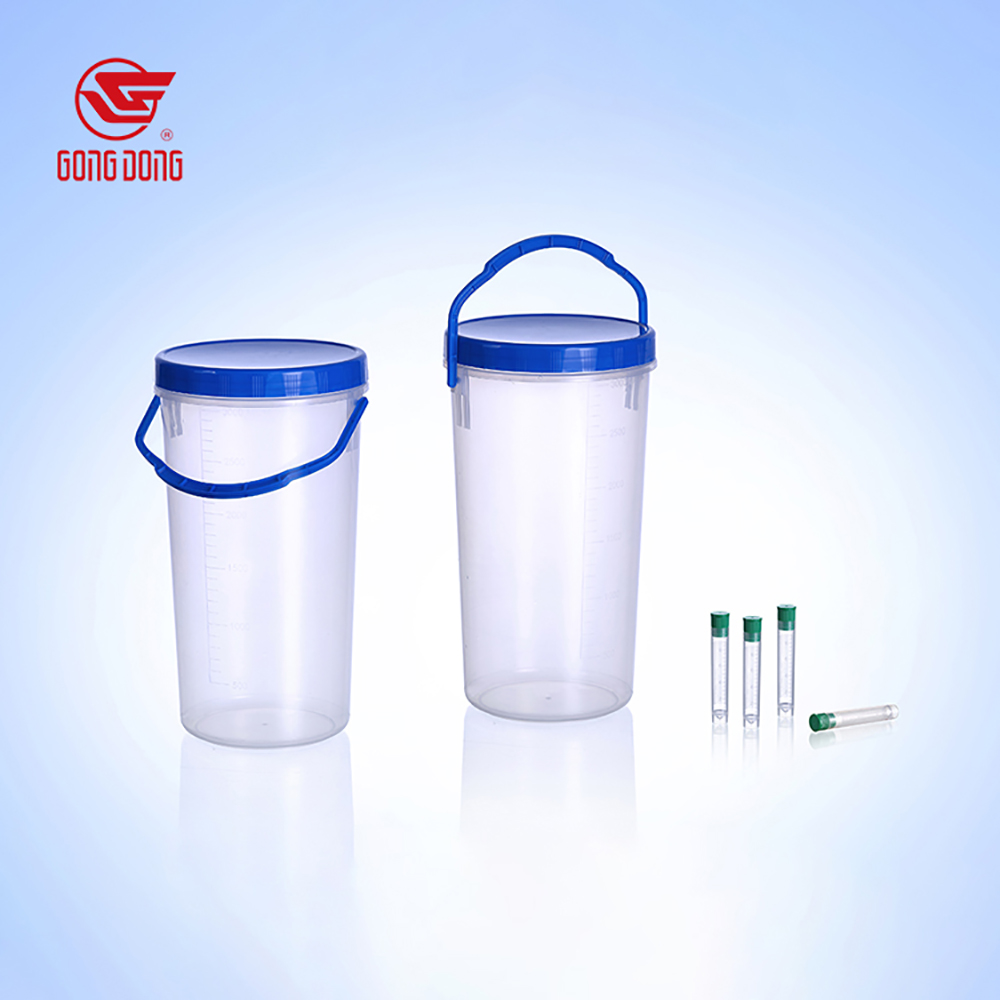 |
Different urine transfer products support different workflow needs.
Buyers should compare collection method, compatibility, staff training needs, and downstream testing requirements.
Integrated transfer cups include a built-in sampling port in the lid.
They reduce extra transfer steps and help keep the system closed after collection.
The needle area is usually recessed or shielded. However, patients still need clear instructions to avoid touching the transfer area.
Straw or pipette transfer devices are separate disposable aspiration tools.
They can draw urine from a standard cup into a vacuum urine tube.
This makes them useful for facilities that still use existing urine cups.
The main drawback is inventory complexity. Procurement teams need to manage another consumable item.
Vacuum urine tubes draw a set volume automatically.
They are available in preservative-free and preserved formats.
Preservative-free tubes are suitable for faster processing. Preserved tubes are useful when transport or testing may be delayed.
Choosing a urine transfer device requires practical evaluation.
The device should support safe handling, stable transfer, and compatibility with laboratory workflows.
A leak-proof urine container should withstand transport stress.
Pneumatic tube systems, couriers, and repeated handling may expose containers to vibration, pressure changes, and impact.
Deep thread engagement and reliable cap sealing help reduce leakage risk.
Vacuum draw consistency affects sample volume.
Short draws may change the urine-to-preservative ratio and affect culture reliability.
For preserved tubes, minimum-fill requirements should be easy for staff to identify.
Medical-grade plastics help protect sample integrity during collection and transport.
PET and polypropylene are commonly used because they provide good clarity and resistance to cracking.
Clear tube walls also help technicians check turbidity, blood, or visible sample issues quickly.
Needle shielding is important in closed transfer systems.
A well-designed transfer port helps reduce accidental needlestick risk during high-volume sample processing.
The device should remain easy to operate while protecting staff during routine use.
Testing purpose determines the correct tube type.
Routine urinalysis and culture testing should not be treated as the same workflow.
Routine urinalysis tubes are often preservative-free.
These samples usually require timely processing. Conical bottom tubes may support automated sediment analysis.
For short workflows, simple tube design and clean transfer are often more important than chemical preservation.
Culture and sensitivity testing often requires bacterial preservation.
Boric acid may be used in lyophilized or liquid form to help maintain sample stability during delayed transport.
Minimum-fill lines are critical. Underfilled preservative tubes may alter the urine-to-preservative ratio and affect bacterial recovery.
Workflow Type | Preservative Needed | Temperature Stability | Key Structural Preference |
|---|---|---|---|
Routine Urinalysis (UA) | None (Typically) | Up to 2 hours at room temp | Conical bottom for sediment analyzers |
Culture & Sensitivity (C&S) | Boric Acid (Lyophilized or Liquid) | Up to 48 hours at room temp | Round bottom, strict minimum fill lines |
A good product still needs a clear rollout plan.
Staff training, inventory control, and workflow matching all affect final performance.
Nursing and phlebotomy staff should understand the correct sequence for closed urine transfer.
Never remove the sealed cup lid under any circumstances.
Peel back the protective safety sticker gently.
Push the tube downward onto the shielded needle smoothly.
Invert tubes multiple times to mix the preservatives thoroughly.
Vacuum tubes may lose draw strength over time.
Departments should monitor expiration dates and rotate stock by first-in, first-out rules.
Expired tubes can cause short draws and unstable sample-to-additive ratios.
Procurement should look beyond the basic unit price.
Closed systems may reduce rejected samples, repeat collection, staff exposure, and turnaround time delays.
The total cost of ownership should include labor, retesting, contamination risk, and workflow efficiency.
Before standardizing a urine collection system, buyers should validate product performance in real workflows.
Use these steps before signing a vendor contract.
Verify regulatory clearance: Check FDA 510(k), CE marking, or other applicable compliance documents. This helps confirm baseline manufacturing quality.
Audit track compatibility: Check automated track systems, racks, tube dimensions, and cap compatibility with decappers.
Request evaluation kits: Review the actual product before bulk purchasing. Check material density, cap fit, clarity, and handling feel.
Run a parallel bench test: Validate vacuum draw strength, leak resistance, and drop performance before facility-wide standardization.
A urine transfer device connects patient collection with laboratory analysis.
If the transfer process is poorly controlled, pre-analytical errors can affect even well-designed testing workflows.
Buyers should evaluate sealing, vacuum draw, material clarity, preservative matching, safety design, and analyzer compatibility.
A practical starting point is to review rejection rates, compare current transfer risks, and test samples before full rollout.
For urine collection system or urine transfer device requirements, you can contact Gongdong Zhejiang Gongdong® Medical Technology Co., Ltd. to share your needs.
A: It helps reduce environmental contamination during transfer.
It also helps protect healthcare workers from spills and aerosol exposure during sample handling.
A: Stability depends on the tube additive and storage condition.
Unpreserved samples usually require fast processing. Boric acid preserved samples may support longer room-temperature stability.
A: The transfer mechanism can be similar.
However, the receiving tubes should match the test. Urinalysis usually uses non-preservative tubes, while culture testing may require preservative tubes.


