
Views: 0 Author: Site Editor Publish Time: 2026-07-13 Origin: Site
Blood collection tubes are essential consumables in clinical laboratories, hospitals, diagnostic centers and healthcare institutions. They are used to collect, preserve, transport and prepare blood samples before laboratory testing. Although they may appear to be simple containers, blood collection tubes play a critical role in accurate sample collection and reliable diagnosis.
In clinical testing, the quality of a blood sample can directly affect the accuracy of test results. If the wrong tube is selected, if the sample volume is incorrect, if the additive does not match the test requirement, or if the sample is not handled properly after collection, the final laboratory result may be affected.
For this reason, blood collection tubes are not only part of the sample collection process. They are part of the pre-analytical quality control system that supports accurate diagnosis.
Before a blood sample reaches an analyzer, it has already passed through several important steps: tube selection, venipuncture, blood collection, mixing, labeling, transportation, centrifugation and storage. These steps are known as the pre-analytical phase.
Many laboratory errors occur before the actual testing process begins. Blood collection tubes help control this stage by providing the correct container, additive, vacuum volume and sample protection for different types of tests.
A suitable blood collection tube helps maintain sample integrity. It supports correct blood-to-additive ratio, reduces contamination risk, prevents unnecessary clotting or hemolysis, and keeps the sample suitable for further laboratory analysis.
For diagnostic laboratories, stable sample quality is the foundation of reliable test results.
 |  |  |
The main function of a blood collection tube is to collect blood safely and prepare it for specific laboratory testing. Different tubes are designed for different testing purposes.
Some tubes are used to obtain serum. Some are used to collect plasma. Some prevent coagulation. Some contain gel for serum or plasma separation. Others contain additives for specific tests such as hematology, coagulation, chemistry or glucose testing.
A blood collection tube must perform several functions at the same time. It should allow smooth blood draw, maintain the required sample volume, contain the appropriate additive, protect the sample during transportation and remain compatible with centrifugation and laboratory workflow.
When these functions work properly, laboratories can process samples more efficiently and produce more dependable results.
Choosing the right blood collection tube is one of the most important steps in sample collection. Each tube type is designed for specific testing requirements. Using the wrong tube may alter the sample and affect laboratory interpretation.
For example, anticoagulant tubes are used when plasma or whole blood is needed. Serum tubes are used when clotting is required before serum separation. Coagulation testing requires a precise ratio between blood and anticoagulant. Glucose testing may require additives that help preserve glucose stability.
Tube selection should always follow the laboratory’s testing protocol. The tube type, additive, closure color and intended use must be clearly understood by collection staff and laboratory personnel.
Accurate diagnosis begins with the correct tube.
Blood collection tubes are available in different types depending on the additive and testing application. The following are commonly used categories in clinical laboratories.
Serum tubes are used when serum is required for testing. They may be plain tubes or tubes containing clot activator. After blood collection, the sample is allowed to clot before centrifugation. Serum can then be separated and used for various clinical chemistry, immunology or serology tests.
Serum separator tubes may contain gel to form a barrier between serum and blood cells after centrifugation. This helps improve sample separation and supports easier handling.
EDTA tubes contain an anticoagulant that helps preserve blood cells and prevent clotting. They are commonly used in hematology testing, such as complete blood count analysis.
The correct blood-to-additive ratio is important. Underfilling or overfilling the tube may affect test quality. After collection, EDTA tubes usually need gentle inversion to ensure proper mixing of blood and additive.
Heparin tubes are used to obtain plasma for certain chemistry tests and other laboratory applications. Heparin prevents clot formation and allows the sample to be processed as plasma.
These tubes may contain lithium heparin or sodium heparin depending on the test requirement. Laboratories should choose the correct heparin tube according to their testing protocol.
Citrate tubes are commonly used for coagulation testing. They require an accurate blood-to-anticoagulant ratio. If the tube is underfilled, the ratio may be incorrect and test results may be affected.
Because coagulation tests are sensitive to collection conditions, citrate tubes require careful handling, correct filling and proper mixing.
Glucose tubes are used for blood glucose and related testing. They may contain additives that help preserve glucose levels in the sample before testing.
Proper tube selection and timely processing are important for glucose-related tests because sample composition can change after collection if not handled correctly.
The additive inside a blood collection tube is one of the key reasons the tube supports accurate diagnosis. Additives are selected according to the test requirement and sample type.
Anticoagulants prevent clotting when plasma or whole blood is needed. Clot activators help speed up clot formation when serum is required. Gel separators help separate serum or plasma from blood cells after centrifugation. Preservatives help maintain the stability of certain analytes.
The additive must be evenly distributed and properly mixed with the blood sample. This is why gentle inversion after collection is often required for additive tubes. Shaking too strongly may damage blood cells, while insufficient mixing may cause clot formation or inconsistent test results.
The additive system should be reliable, consistent and suitable for the intended laboratory application.
 |  | 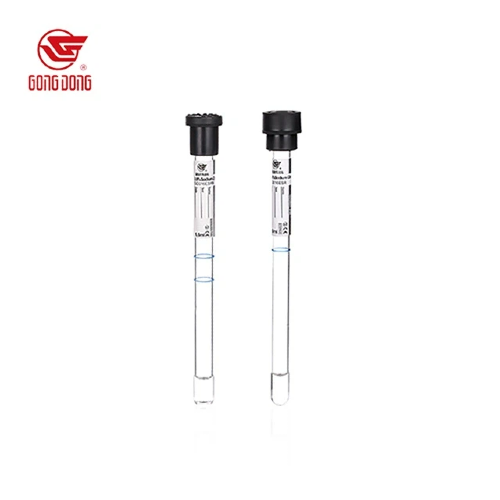 |
Vacuum blood collection tubes are designed to draw a preset volume of blood. This helps standardize the sample collection process and supports the correct ratio between blood and additive.
Correct sample volume is especially important for tubes containing anticoagulants. If the blood volume is too low or too high, the ratio between blood and additive may become inaccurate. This can affect test performance, especially in coagulation and hematology testing.
Stable vacuum performance helps collection staff obtain the required sample volume more efficiently. For medical institutions and diagnostic laboratories, consistent vacuum quality is an important feature of reliable blood collection tubes.
Accurate diagnosis depends not only on the tube and additive, but also on sample identification. A properly collected sample can still become unusable if it is mislabeled or cannot be traced correctly.
Blood collection tubes should provide enough space for labeling. Labels should remain clear and attached during transportation, centrifugation and laboratory handling. Tube design should also allow laboratory staff to see the sample condition when needed.
For high-volume laboratories, clear labeling and tube identification help reduce sample mix-ups and improve workflow efficiency.
After blood is collected, the tube must be handled according to laboratory requirements. Additive tubes usually require gentle inversion to mix blood and additive. Some serum tubes need clotting time before centrifugation. Tubes used for sensitive tests may require specific transport or storage conditions.
Rough handling may cause hemolysis. Delayed processing may affect sample stability. Incorrect storage may influence analyte quality. These problems can reduce the reliability of diagnostic results.
A good blood collection tube supports sample stability, but correct handling is still necessary. Tube quality and laboratory procedure must work together.
Many blood samples need centrifugation before analysis. Centrifugation separates blood components such as serum, plasma and cells. Blood collection tubes must be able to withstand centrifugation conditions without cracking, leaking or deforming.
For gel separator tubes, centrifugation allows the gel to form a stable barrier between the liquid component and blood cells. This helps maintain sample separation and makes it easier for laboratory staff or automated systems to process the sample.
Tube strength, material quality, cap sealing and dimensional consistency all influence centrifugation performance. In busy laboratories, reliable tube performance helps reduce sample loss and equipment contamination.
Most modern blood collection tubes are made from plastic or glass. Plastic blood collection tubes are widely used because they are lightweight, resistant to breakage and suitable for high-volume clinical use. Glass tubes may still be used for certain applications, but plastic tubes are more common in many medical environments.
The tube material should be compatible with the additive, sample and testing process. Tube transparency is also important because laboratory staff may need to observe sample volume, clotting, hemolysis, separation layers or gel barrier position.
A well-designed tube should support easy handling, secure sealing, clear observation, stable labeling and compatibility with laboratory instruments.
Blood collection tube quality depends on precise manufacturing. Important quality factors include stable vacuum, accurate additive volume, clean inner surface, reliable cap sealing, consistent tube dimensions and proper packaging.
If the vacuum is unstable, the tube may not draw the correct blood volume. If the additive amount is inconsistent, the sample may not be properly preserved. If the cap does not seal well, leakage or contamination may occur. If the tube dimensions vary, compatibility with racks, centrifuges or automated systems may be affected.
For clinical diagnosis, consistency matters. Laboratories need blood collection tubes that perform the same way across batches and repeated orders.
Modern diagnostic laboratories often process large numbers of samples every day. Blood collection tubes must support both manual handling and automated workflows.
In addition to sample safety, laboratories also care about efficiency. Tubes should be easy to identify, easy to label, compatible with racks and centrifuges, and suitable for storage and transportation. For diagnostic centers and hospitals, reliable tubes help reduce workflow interruptions and support faster sample processing.
As laboratory testing becomes more standardized, the quality of blood collection consumables becomes increasingly important.
When selecting blood collection tubes, laboratories and distributors should consider several practical factors.
The tube type should match the test requirement. The additive should be suitable for the intended sample and diagnostic application. Vacuum performance should support correct sample volume. Cap sealing should reduce leakage risk. Tube material should be strong enough for daily handling and centrifugation. Packaging should protect product cleanliness and support efficient storage.
Buyers should also evaluate supplier reliability. For medical consumables, stable production capacity, quality management and documentation support are important for long-term procurement.
Choosing a dependable blood collection tube manufacturer helps ensure consistent product quality and stable supply.
Gongdong provides disposable medical devices and laboratory consumables for clinical laboratories, hospitals, diagnostic centers, healthcare institutions and global distributors. Its product portfolio includes blood collection systems, laboratory consumables, specimen collection containers, cell culture products, nursing plasticwares and customized medical plastic solutions.
With experience in medical consumable manufacturing, mold development, automated production and quality management, Gongdong supports customers with reliable blood collection tube solutions for clinical sample collection and diagnostic testing workflows.
For laboratories and distributors, choosing high-quality blood collection tubes helps improve sample handling, support accurate diagnosis and maintain stable daily laboratory operations.
Blood collection tubes are essential for accurate sample collection and diagnosis. They help control sample volume, preserve sample quality, support correct blood-to-additive ratio, protect samples during handling and prepare blood specimens for laboratory testing.
The right tube can improve the reliability of the pre-analytical process. The wrong tube may affect sample quality and create unnecessary diagnostic risks.
For clinical laboratories, hospitals and diagnostic centers, blood collection tubes should be selected carefully based on test requirements, additive type, vacuum quality, material, sealing performance, centrifugation compatibility and supplier reliability.
Accurate diagnosis starts with accurate sample collection, and accurate sample collection depends on reliable blood collection tubes.
Blood collection tubes are used to collect, preserve, transport and prepare blood samples for laboratory testing and clinical diagnosis.
Different tests require different sample types, such as serum, plasma or whole blood. Different tubes contain different additives to prepare and preserve the sample correctly.
Additives may prevent clotting, promote clotting, separate serum or plasma, or help preserve specific analytes. The additive must match the intended laboratory test.
Vacuum quality helps draw the correct blood volume. Correct sample volume is important for maintaining the proper ratio between blood and additives.
They help maintain sample integrity, reduce contamination risk, support correct sample preparation and improve reliability during the pre-analytical stage of laboratory testing.


