
Views: 0 Author: Site Editor Publish Time: 2026-06-22 Origin: Site
Preanalytical errors can affect laboratory accuracy, turnaround time, and patient care.
Choosing the wrong blood collection tube may distort test results, force redraws, and delay clinical decisions.
This guide compares EDTA tubes, heparin tubes, and serum tubes. It helps laboratory teams and procurement managers match tube type to testing workflow.
Serum vs. Plasma: The key choice is whether the test needs clotted serum or anticoagulated plasma.
EDTA: An EDTA tube is widely used for cellular preservation and hematology testing. It is not suitable for many chemistry panels because it chelates calcium.
Heparin: A heparin tube supports rapid STAT chemistry testing, but it can interfere with PCR and molecular assays.
Serum Tubes: Serum tubes offer useful analyte stability, but they require clotting time before centrifugation.
Preanalytical Risk: The standardized order of draw is important. Additive cross-contamination can invalidate downstream assays.
Before choosing a tube additive, the lab must define the required specimen type.
Serum is the fluid that remains after blood has clotted. It does not contain fibrinogen because clotting consumes it.
Plasma is the fluid collected when clotting is prevented by an anticoagulant. It retains clotting factors.
A plasma blood collection tube can often be centrifuged immediately. This helps reduce turnaround time for urgent testing.
Plasma can also provide more fluid volume from the same blood draw, which may be useful for low-volume patients.
Serum may offer better stability for selected analytes. It can also reduce some cell-rupture artifacts when samples face rough transport.
Feature | Serum | Plasma |
|---|---|---|
Biological State | Clotted, fibrinogen depleted | Unclotted, fibrinogen retained |
Centrifugation Timing | Delayed, requires clotting time | Immediate, no clotting wait |
Fluid Yield | Lower | 15–20% higher |
Core Advantage | Good analyte stability for selected tests | Rapid turnaround for STAT testing |
An EDTA tube is commonly used in hematology.
EDTA binds calcium ions and stops the coagulation process. This helps preserve blood cells for accurate counting and morphology review.
EDTA tubes are often used for complete blood counts, blood typing, and some molecular testing workflows.
They can preserve cellular structures well when the sample is filled and mixed correctly.
K2EDTA and K3EDTA have different formulation characteristics. Underfilling may affect blood-to-additive ratio and cell measurement quality.
Best Practice: Always observe the fill line. Proper blood-to-additive ratio helps prevent cell shrinkage and inaccurate results.
Best Practice: Gently invert the sample 8 to 10 times immediately after collection to mix the additive evenly.
Common Mistake: Do not use EDTA tubes for routine chemistry panels. EDTA chelates calcium and can cause false calcium and potassium results.
A heparin tube is used when fast plasma testing is needed.
Lithium or sodium heparin binds to antithrombin and helps prevent clot formation quickly.
This makes heparin tubes useful for urgent clinical chemistry panels and blood gas workflows.
The main advantage is speed. Labs can draw, centrifuge, and test without waiting for clot formation.
Some workflows may use a heparin tube with separator gel to support plasma separation after centrifugation.
However, heparin is not suitable for every workflow.
It can inhibit PCR reactions and interfere with molecular assays. It is also unsuitable for CBC testing because it may cause leukocyte clumping.
Serum tubes are used when the test requires a clotted, cell-free specimen.
A serum clot activator tube may contain silica particles to support clot formation.
A serum gel and clot activator tube includes separator gel. During centrifugation, the gel forms a barrier between serum and cells.
A plain blood collection tube may be used when additives or separator gel are not required.
Standard silica serum tubes usually require about 30 minutes of clotting before centrifugation.
Rapid serum tubes use thrombin to shorten clotting time. They can help reduce turnaround time for selected urgent workflows.
Best Practice: Keep standard silica tubes upright for about 30 minutes before centrifugation. Early centrifugation may leave fibrin strands in the serum.
Common Mistake: Avoid gel-separator tubes for some therapeutic drug monitoring and lipophilic hormone testing. The gel may absorb certain drugs or hormones and lower measured values.
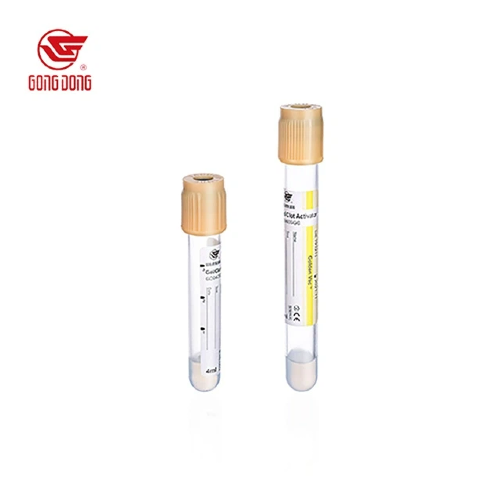 | 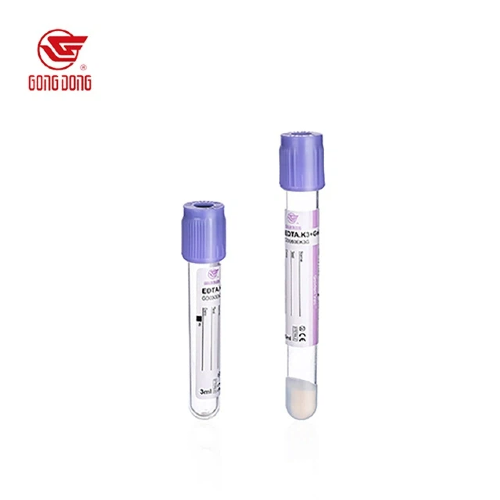 | 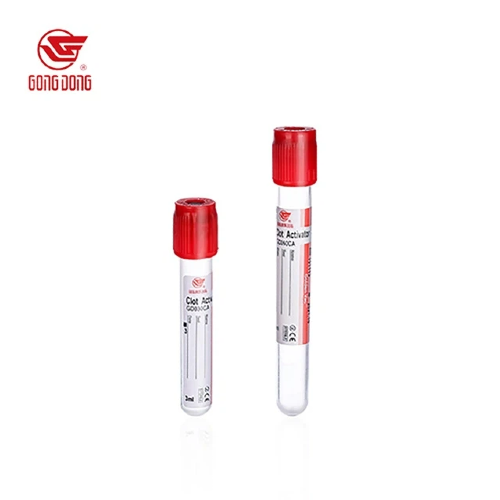 |
Disposable Blood Collection Tube (Serum Gel And Clot Activator Tube) | Disposable Blood Collection Tube (Serum Clot Activator Tube) |
Blood collection tubes require correct handling to deliver reliable results.
Small collection errors can cause redraws, analyzer issues, and misleading diagnostic data.
Butterfly needles contain tubing that may hold air before blood enters the first tube.
This can cause underfilling, especially when a citrate coagulation tube is drawn first.
Underfilling affects the required blood-to-additive ratio and may invalidate coagulation results.
A discard tube can be used first to clear the tubing before collecting the citrate tube.
Anticoagulant tubes should be inverted gently after collection.
Shaking can cause hemolysis. Inadequate mixing can cause micro-clots.
Both issues can make the sample unsuitable for automated testing.
Tube additives can affect advanced chemical profiling.
For biobanking and metabolomics, additive selection should match the study design and analytical platform.
Some additives may introduce artificial peaks or distort the chemical baseline.
Every clinical institution should enforce the standardized order of draw.
Needles can carry small amounts of additive from one tube into the next.
If EDTA contaminates a serum tube, chemistry results may show false calcium depletion and abnormal potassium elevation.
Following the correct sequence helps prevent additive carryover and invalid test results.
Blood Culture Bottles: Draw first to protect sterility and reduce false-positive culture risk.
Sodium Citrate (Light Blue): Draw coagulation tubes early because they are sensitive to contamination and fill ratio errors.
Serum Tubes (Red/Gold): Use for standard chemistry tests, including plain tubes and tubes with clot activators or gel.
Heparin Tube (Green): Use for STAT chemistry plasma samples when rapid processing is needed.
EDTA Tube (Purple/Pink): Draw later to protect earlier chemistry samples from calcium chelation.
Glycolytic Inhibitors (Gray): Draw last because fluoride or oxalate mixtures can interfere with many cellular and chemical assays.
Procurement teams should not evaluate blood collection systems by unit price alone.
Tube additive accuracy, vacuum consistency, cap sealing, label clarity, and analyzer compatibility all affect daily performance.
For high-volume laboratories, standardized blood collection tubes can help reduce staff confusion and preanalytical variation.
Before bulk purchasing, buyers should request samples and validate tube performance with their own analyzers and testing protocols.
Choosing the right vacuum blood collection tube depends on the test requirement.
Heparin supports fast chemistry testing. EDTA supports hematology and cellular preservation. Serum tubes support selected analytes that require a clotted specimen.
Labs should standardize tube selection based on high-volume assays, turnaround time goals, and analyzer compatibility.
Procurement teams should also evaluate additive quality, vacuum consistency, fill accuracy, tube labeling, and staff training requirements.
For blood collection tube or clinical laboratory consumable requirements, you can contact Gongdong Zhejiang Gongdong® Medical Technology Co., Ltd. to share your needs.
A: No. Heparin may cause white blood cells to clump.
This can affect automated cell counting and peripheral blood smear quality. EDTA is the standard choice for CBC testing.
A: Winged collection tubing may contain air.
That air can cause the citrate tube to underfill, which affects the required blood-to-anticoagulant ratio for coagulation testing.
A: Very high hematocrit can change the plasma volume in the tube.
For sodium citrate tubes, this may require anticoagulant adjustment according to laboratory policy to avoid inaccurate coagulation results.
A: It can interfere with some tests.
Separator gel may absorb certain therapeutic drugs or lipophilic hormones. For these assays, plain serum tubes may be more suitable.


