
Views: 0 Author: Site Editor Publish Time: 2026-01-26 Origin: Site
Pipettes are essential in labs for precise liquid measurements. But not all pipettes are the same. In this article, we will explore the differences between serological pipettes and volumetric pipettes. You’ll learn about their unique features, uses, and how to choose the right one for your tasks.
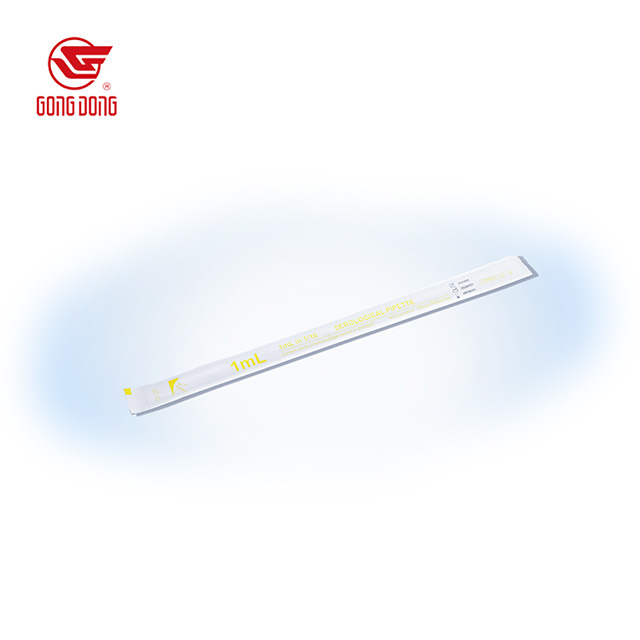
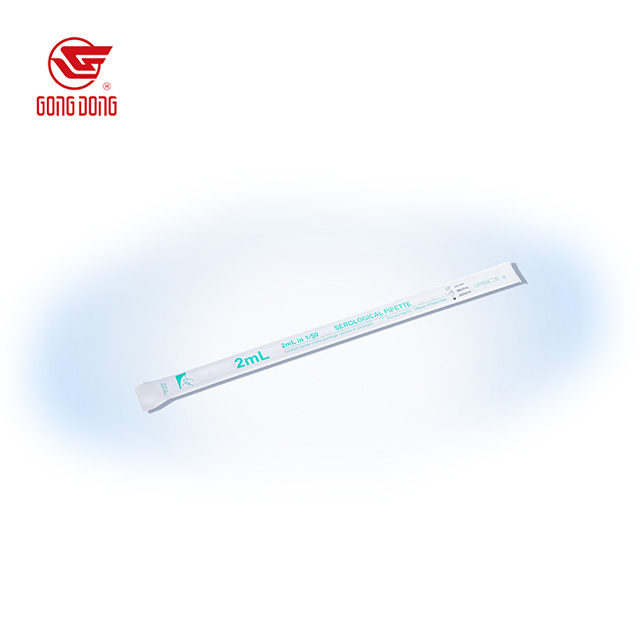
A serological pipette is a graduated glass or plastic tube used to measure and transfer liquids in volumes typically ranging from 1 mL to 50 mL. Unlike other pipettes, serological pipettes have graduation marks all the way down to the tip. This feature allows for the measurement of various volumes depending on the experimental needs.
Serological pipettes are ideal for use in biology and medical laboratories where precise but flexible liquid measurements are needed. The ability to measure and transfer different amounts of liquids makes them essential in experiments requiring serial dilutions or the mixing of reagents.
Serological pipettes are commonly made from either glass or polystyrene (plastic). Glass pipettes offer superior durability and can be sterilized by autoclaving. On the other hand, plastic pipettes are more economical, disposable, and resistant to breaking.
Typically, serological pipettes come with graduations that provide a clear indication of the liquid volume. These pipettes are often marked with a positive meniscus (indicating the liquid level at the lowest point of the curve) to ensure accurate measurements.
Serological pipettes are frequently used for tasks that require flexibility in liquid measurement, such as:
● Dilution of substances in microbiology: They are used to prepare diluted solutions, essential in microbiological experiments.
● Cell culture media preparation in biological research: Essential for accurate measurement of culture media to grow cells or microorganisms.
● Mixing reagents for chemical reactions: Perfect for adding or mixing precise amounts of chemicals in laboratory reactions.
● Liquid transfer for pharmaceutical applications: Used for transferring liquids in pharmaceutical labs, ensuring consistency in measurements.
Serological pipettes provide several advantages:
● Versatility: Serological pipettes can handle a wide range of volumes, from 1 mL to 50 mL, making them ideal for various laboratory tasks that require flexibility.
● Graduation Marks: Their multiple graduation marks allow for accurate measurements across various volumes, providing versatility in both small and large liquid transfers.
● Affordable and Disposable Options: While glass pipettes can be sterilized and reused, plastic alternatives are more cost-effective and can be disposed of after use, offering convenience for high-throughput tasks.
Tip: Always choose a serological pipette with a volume range that matches the liquid volume you need to measure to ensure accurate results.

A volumetric pipette is designed for precision when measuring and transferring a fixed, specific volume of liquid. These pipettes are often used when an extremely high level of accuracy is required. Unlike serological pipettes, volumetric pipettes are typically used for transferring a single, exact volume (e.g., 10 mL, 25 mL).
The main feature of a volumetric pipette is its single graduation mark near the neck, allowing for the precise measurement of a specific volume. This makes them ideal for applications requiring high reproducibility, such as titrations and solution preparation.
Volumetric pipettes are usually made from glass and come with a bulb in the middle of the tube. The single, precise graduation mark near the top ensures the pipette measures a specific, predetermined volume.
The pipette's uniform diameter ensures that liquid is transferred without air bubbles or inaccuracies, which is crucial for achieving accurate results in sensitive applications.
Volumetric pipettes are primarily used for precise measurements, such as:
● Preparation of standard solutions in chemistry.
● Quantitative analysis in analytical chemistry.
● Titrations, where accuracy is paramount.
● Calibrating solutions for laboratory instruments.
Volumetric pipettes are known for their extreme accuracy. Because they measure only one specific volume, they are highly effective for experiments that require the exact amount of liquid, ensuring minimal error.
Both pipettes are accurate, but their level of precision differs. Serological pipettes are more versatile in volume range but tend to have slightly lower accuracy than volumetric pipettes, which are designed specifically for precise measurements of a fixed volume.
Serological pipettes are calibrated for a range of volumes and have multiple graduation marks. Volumetric pipettes, on the other hand, are designed for only one specific volume with a single graduation mark, making them more accurate for that exact volume.
Feature | Serological Pipette | Volumetric Pipette |
Volume Range | Multiple volumes available | Single, specific volume |
Calibration | Graduated for variable volumes | Calibrated for one volume |
Material | Glass or plastic | Primarily glass |
Precision | Less precise than volumetric | Highly precise |
Best Use | Dilutions, media preparation | Exact measurements in analysis |
Serological pipettes are used in versatile tasks such as dilutions and reagent transfers, while volumetric pipettes are crucial for high-accuracy measurements in chemical and analytical processes.
Serological pipettes, especially plastic ones, are generally less expensive and more readily available than the more specialized volumetric pipettes. Plastic serological pipettes are disposable, making them a cost-effective solution for short-term or high-throughput tasks.
When choosing between a serological and a volumetric pipette, consider the following:
● Volume requirement: Do you need a fixed, precise volume (volumetric pipette), or a range of volumes (serological pipette)?
● Accuracy needs: If precision is critical, go for a volumetric pipette.
● Application: For routine tasks such as dilutions, a serological pipette is a better choice, while volumetric pipettes excel in experiments requiring high accuracy.
Serological pipettes are ideal for:
● Preparing serial dilutions in microbiology.
● Mixing chemical reagents in chemical analysis.
● Transferring cultures and media in biological research.
If you’re working on high-accuracy applications like titrations or preparing standard solutions, a volumetric pipette is essential. For more flexible and routine tasks, a serological pipette will suffice.
1. Attach the pipette to a pipette controller.
2. Fill the pipette with liquid, ensuring the meniscus aligns with the desired volume.
3. Dispense the liquid into the receiving container, ensuring the last drop is released.
4. Clean the pipette thoroughly after use.
● Regular cleaning: Clean serological pipettes between uses to avoid contamination.
● Storage: Store pipettes upright to prevent damage to the graduations.
● Inspection: Regularly check for cracks or chips, particularly in glass pipettes.
1. Fill the pipette to the calibration mark with liquid, avoiding air bubbles.
2. Transfer the liquid into the container slowly, ensuring no liquid is left behind.
3. Clean the pipette thoroughly after every use.
● Serological Pipettes: Avoid forcing the last drop out, which could lead to inaccurate volume measurements.
● Volumetric Pipettes: Do not fill above or below the calibration mark as this can lead to significant errors.
While both serological and volumetric pipettes are essential for laboratory work, they serve different purposes. Serological pipettes are versatile and ideal for measuring a range of volumes, while volumetric pipettes offer superior precision for measuring a single, exact volume. Choosing the right pipette comes down to your specific needs. For flexible measurements, serological pipettes are perfect. However, when absolute precision is required, volumetric pipettes should be your go-to tool. For more information or to place an order, feel free to contact Zhejiang Gongdong® Medical Technology Co., Ltd. We are happy to assist with your pipette needs.
A: A serological pipette is a laboratory tool used for measuring and transferring a variety of liquid volumes. It has multiple graduation marks, allowing for flexibility in volume measurements.
A: Serological pipettes have multiple graduation marks for flexible measurements, whereas volumetric pipettes are designed for precise, fixed volumes with a single graduation mark.
A: Use a serological pipette for tasks like dilutions, reagent mixing, or transferring liquids in varied volumes. It is perfect for routine laboratory applications.
A: No, volumetric pipettes are more accurate since they measure a single, fixed volume, while serological pipettes offer flexibility but are slightly less precise.


